Key takeaways:
For global enterprises, standardizing every subsidiary onto a single ERP system is often unrealistic and prohibitively expensive. Regional subsidiaries may may operate on a mix of legacy software and transactional ERPs from different vendors. For controllers, the challenge is not simply the number of ERPs; it is the work required to align local ledger data to the group chart of accounts, entity hierarchy, currency translation rules, intercompany relationships, and reporting requirements.
Rather than waiting for a costly ERP consolidation initiative, finance teams can use AI-assisted chart of account mapping and governed integrations to harmonize financial data for consolidation and reporting across the systems they, and their subsidiaries, already use.
Hidden friction within the multi-ERP environment
In many multi-ERP environments, group consolidation depends on trial balances and reporting packages from systems that rarely share the same chart of accounts, entity structures, currencies, intercompany identifiers, or reporting dimensions. Each new account, entity, acquisition, or reporting requirement can create additional mapping work, data reconciliation efforts, and review risk.
Managing this landscape creates risk on several fronts at once. Without governed integrations and maintained mappings, finance teams often rely on manual interventions, offline reconciliations, and spreadsheet-based adjustments to prepare data for group consolidation. And because subsidiaries running on different systems may also follow different local processes, company-wide consistency becomes harder to maintain.
The result can be operational blind spots. When reviewers have to monitor multiple disconnected systems, mapping files, and offline journal adjustments, it becomes easier for new accounts, inconsistent metadata, or unusual balances to slip through until late in the consolidation cycle.
This is where data reconciliation delays and inconsistent policy enforcement start to feel normal rather than exceptional. Each ERP or general ledger may use different account codes, segment structures, cost center hierarchies, fiscal calendars, intercompany identifiers, and local statutory reporting requirements. That makes it harder to align local results to the group chart of accounts and consolidated reporting model.
Fragmented systems can also complicate access controls, segregation of duties, audit evidence, and policy enforcement. For controllers, the risk is not only getting the numbers right but proving how each number moved from local ledger to consolidated reporting.
The role of AI in harmonizing disparate systems
AI-assisted mapping can help finance teams reduce the consolidation burden of a multi-ERP environment without forcing every entity onto the same source system. It supports the work of bringing data from multiple ERP sources, general ledgers, and reporting packages into a governed consolidation model across entities and geographies.
In multi-entity organizations, subsidiaries often use different charts of accounts, account codes, segment structures, fiscal calendars, intercompany identifiers, and local reporting requirements. Controllers have to align that local data to the group chart of accounts and consolidated reporting model before they can complete currency translation, intercompany eliminations, adjustments, validations, and reporting.
Automation reduces risk-prone manual activities and helps your finance team:
- Align local charts of accounts, entity structures, intercompany partners, and reporting dimensions to a standardized group reporting framework
- Support master data governance by identifying and flagging new, unmapped, duplicate, or inconsistent account and entity values before they create downstream consolidation issues
- Harmonize data from different ERP and general ledger structures into a governed consolidation and reporting model
- Maintain auditable mappings, transformations, and reporting views for group, statutory, and management reporting requirements, including parallel accounting frameworks where applicable
Bringing agility to controllership
Once mappings are established, governed, and validated, finance teams can accelerate recurring consolidation cycles, reduce rework caused by inconsistent source data, and deliver a more reliable view of consolidated actuals to stakeholders.
Standardized mappings give controllers more time to review exceptions, validate results, investigate variances, and explain consolidated performance instead of chasing mapping errors across spreadsheets and source systems.
Can AI effectively map my chart of accounts if subsidiary data lives on different ERPs?
Yes. AI-assisted chart of account mapping can suggest account alignments, identify unmapped or inconsistent values, flag anomalies, and route exceptions for finance review before they affect your consolidated reporting.
Unifying your enterprise with Anaplan
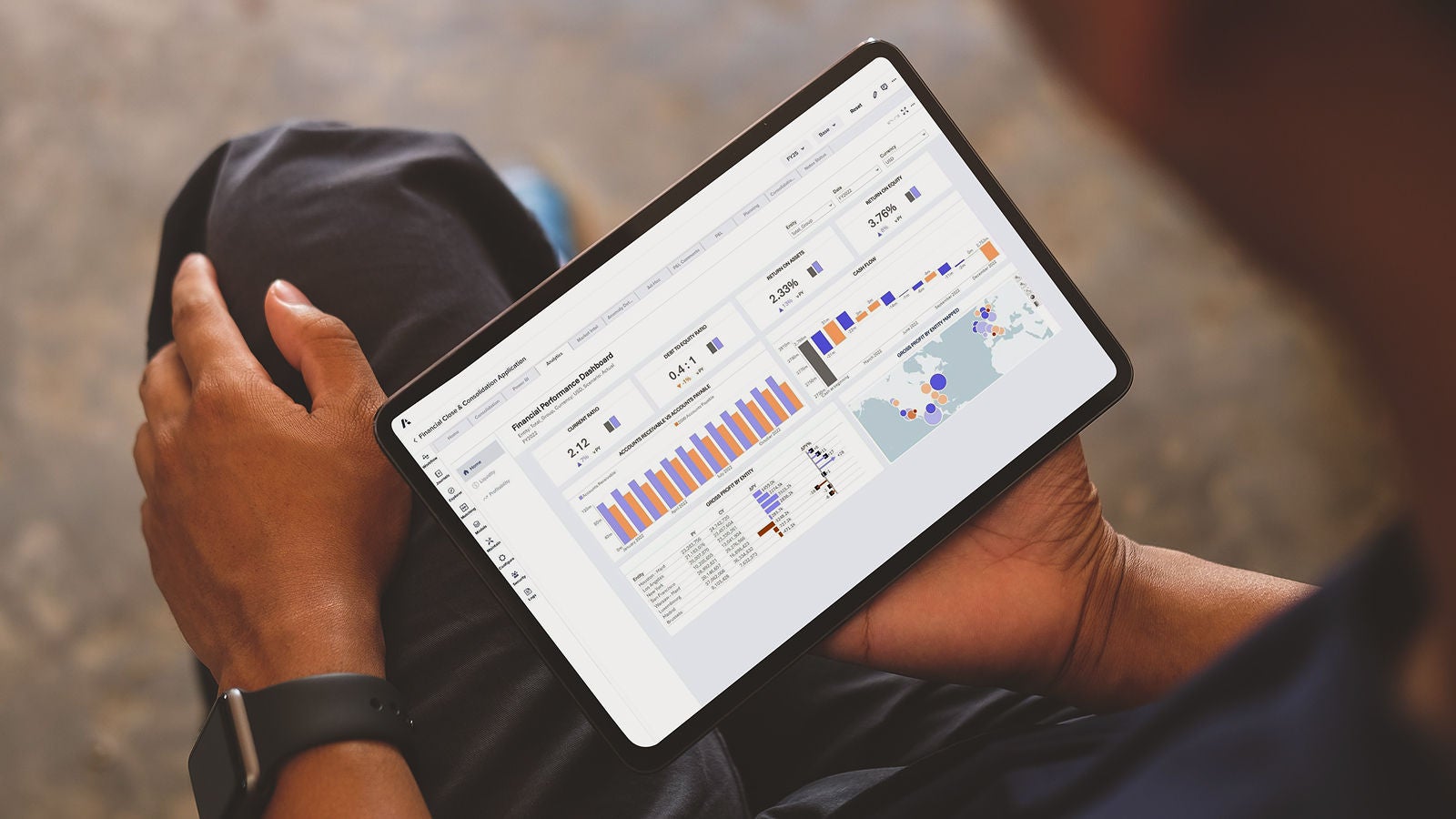
The Anaplan Financial Consolidation application helps finance teams connect data from multiple ERP and general ledger sources without choosing one source system for every entity. Our AI-assisted capabilities help map, validate, and analyze financial data across entities and regions.
Anaplan’s practical use of AI helps streamline the data harmonization work behind consolidation. AI-assisted chart of accounts mapping can detect and suggest correct mappings, flag exceptions for review, and help controllers maintain a governed, transparent path from source ledger data to consolidated results. Time-to-value is accelerated with pre-built configurations, secure integrations, and best practices.
Measurable efficiency gains and substantial cost savings
The Forrester Total Economic Impact™ study found that companies are achieving 152% ROI over three years, with a $4.3M financial benefit gained by organizations using Anaplan to optimize their group close and consolidation efficiency.
That efficiency comes from how the application is built, not just what it claims to do. Flexible, secure integrations seamlessly connect to the ERPs and data sources finance teams already use, so there is no rip-and-replace requirement to get started. Embedded AI, built-in validation rules, and automated workflows help flag unusual balances, mapping issues, and data anomalies for review, while granular audit trails give controllers the transparency to trace results from source data through consolidated reporting.
Rather than treating regulatory compliance as a separate task layered on top, Anaplan provides the auditable, granular foundation that supports your team in meeting regional standards like GAAP, IFRS, or ASPE.
From fragmented source data to governed consolidation
Multi-ERP consolidation is not about forcing every subsidiary onto the same technology stack. It is about creating governed, consistent reporting across the systems the business already uses.
Every acquisition, divestiture, or restructuring event can introduce new ledgers, entity structures, ownership changes, and reporting requirements. Controllers need a consolidation process that can absorb that change without rebuilding the model from scratch.
The goal is not one ERP. It is one governed source of consolidated truth. With that, finance teams can move beyond reconciling historical results and focus on explaining performance, supporting decisions, and preparing the business for what comes next.