SCM-driven management transformation at OMRON Healthcare

Healthcare products manufacturer moves from decentralized operations to centralized global management

  • Solutions

    Supply Chain

  • Industry

    Pharma & Life Sciences

  • Platform capability

    Security & Administration

OMRON Healthcare, part of the OMRON Group, provides healthcare products such as blood pressure monitors and thermometers used worldwide. By leveraging Anaplan, the company successfully migrated from decentralized, site-by-site inventory management to a centralized global system. Even amid disruption due to the COVID-19 pandemic, OMRON Healthcare achieved record-breaking sales and has continued to grow steadily since. The company also connected previously siloed functions and data, extending the use of Anaplan beyond supply chain operations to enterprise performance management.


Without Anaplan’s ability to drive globally optimized operations, we could not have effectively allocated limited products worldwide, and our business would have faced far greater disruption during the pandemic.
Kosuke Izawa, Senior General Manager, Corporate Transformation HQ, OMRON Healthcare

Highest

profits in company history achieved through centralized inventory management

75%

market inventory visibility

25%

SKU reduction through optimization initiatives


With 84% of its sales coming from overseas and a 50% global market share in its flagship blood pressure monitors, OMRON Healthcare operates one of the most dynamic international supply chains in the healthcare industry. “As our international business expanded and new online channels emerged alongside traditional retail, our operations became increasingly complex,” recalls Kosuke Izawa, Senior General Manager of the Corporate Transformation HQ at OMRON Healthcare. “We recognized the need for headquarters to gain a clear view of global operations and manage them centrally.”

In 2018, OMRON Healthcare transitioned from regionally managed inventories to a centralized, headquarters-led model, consolidating both component and finished goods inventory across all global sites. When the COVID-19 pandemic struck, the company faced challenges such as semiconductor shortages, logistics disruptions, factory lockdowns, and extended lead times, all while global health awareness drove demand for blood pressure monitors and thermometers to unprecedented levels.

“Because we had already implemented centralized inventory management, we were able to allocate products where they were most needed,” says Kosuke Izawa. “Without Anaplan’s ability to drive globally optimized operations, we could not have effectively allocated limited products worldwide, and our business would have faced far greater disruption during the pandemic.”

Despite worldwide supply chain turmoil, OMRON Healthcare achieved record profits in 2020, reaching a milestone in the company’s transformation journey.
Over the course of five years, we gradually expanded the use of Anaplan for supply chain management and unified governance, while continuously optimizing operations through data integration.
Kosuke Izawa, Senior General Manager, Corporate Transformation HQ, OMRON Healthcare

Scrutinizing enterprise-wide challenges through SCM

The transformation taking place in OMRON Healthcare began with global inventory management. By 2020, the company achieved full market visibility by tracking distribution inventory and sell-out conditions across regions. Even in production, which was hit hardest during the pandemic, the company advanced capacity visibility and reformed parts inventory management.

“Over the course of five years, we gradually expanded the use of Anaplan for supply chain management and unified governance, while continuously optimizing operations through data integration,” explains Kosuke Izawa. “As we moved toward end-to-end supply chain management, deeper challenges emerged. When it became difficult to balance supply and demand during the pandemic, we had to decide how to allocate components across SKUs. That raised a fundamental question: Do we really need this many SKUs? Each SKU involves multiple departments, R&D, production, and more, so even low-contributing SKUs can generate company-wide inefficiencies. This led us to develop product lifecycle management initiatives focused on optimizing the SKU portfolio.”

OMRON Healthcare has since expanded Anaplan’s use into enterprise performance management. Having achieved quantitative control over supply chain management (SCM) areas such as demand planning and inventory optimization, management began asking how supply-demand gaps translated into business impact.

“In response, we developed the ability to visualize these impacts in financial terms,” says Kosuke Izawa. “And then integrated this view with the budgeting and quarterly planning processes managed by our finance department.”

Enabling business transformation from the SCM function

In the manufacturing sector, SCM can serve as the catalyst for enterprise transformation, according to Kosuke Izawa. “Each company has multiple functions, sales, R&D, production, each facing its own challenges,” describes Kosuke Izawa. “As organizations grow, these functions often become siloed, making it difficult to see company-wide issues. The SCM department, however, has end-to-end visibility of field operations and a deep understanding of business processes. By collaborating closely with corporate management, SCM can help identify and resolve enterprise-level challenges.”

Kosuke Izawa emphasizes that Anaplan’s ability to connect siloed functions and data has been instrumental in enabling cross-functional collaboration, from SCM to management and finance.

“There are many tools designed specifically for SCM or for financial planning,” he adds. “But Anaplan stands out because it is built to span multiple business domains. Its flexibility allows us to track the progress of different planning initiatives and continuously evolve our strategies, making it an ideal platform for driving company-wide transformation.”


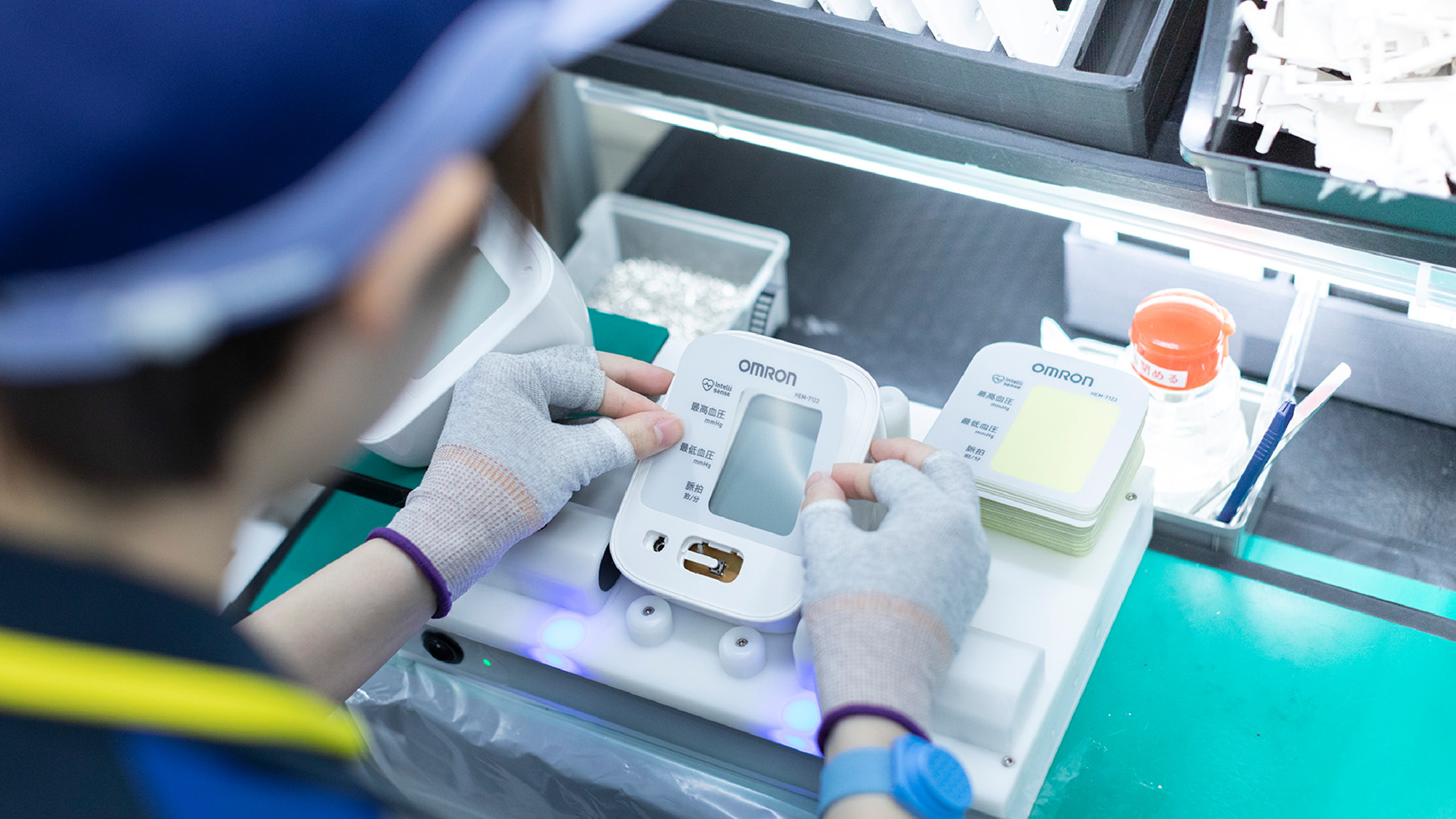
A factory worker assembling an Omron medical device, placing components onto the device housing at a workstation.
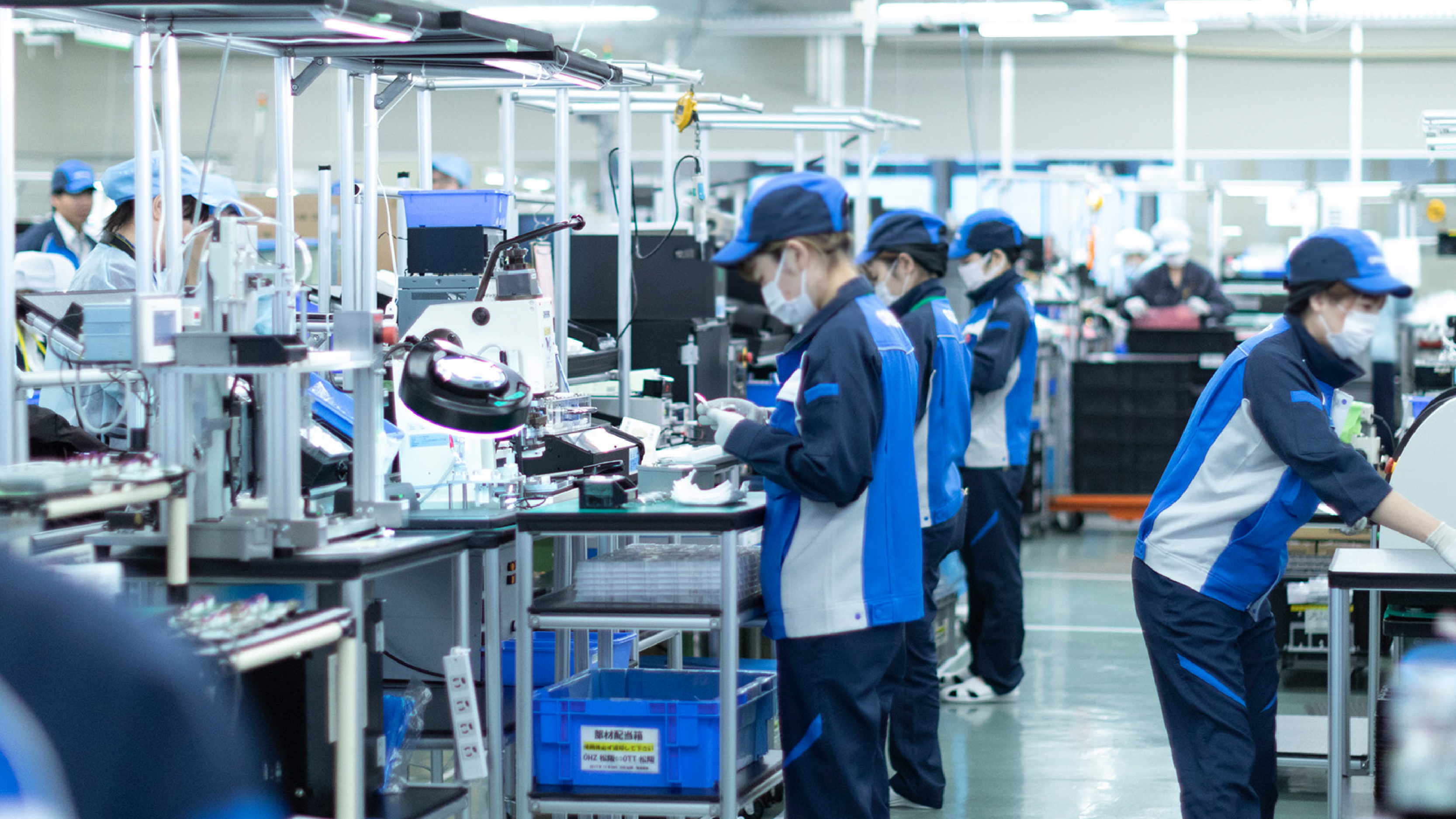
Factory workers in blue uniforms and masks operating equipment and assembling products on a busy production floor.