

Episode 5 17:14 min
How athenahealth's CEO made an all-in bet to outpace the market
-
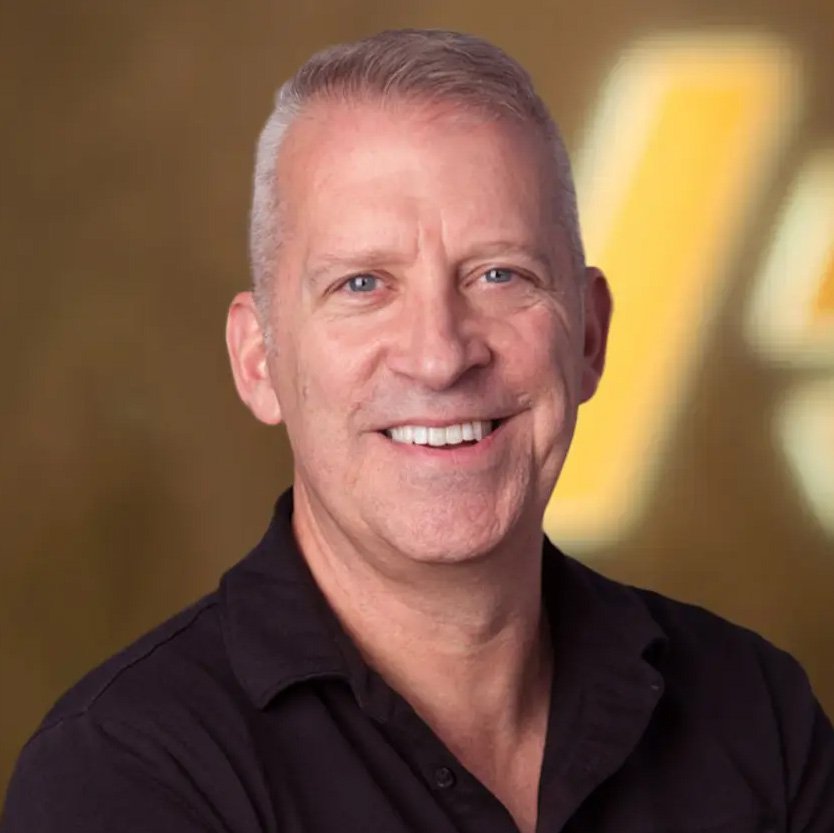
Hosted by:
-
Share
Episode summary
What does it take to execute a fundamental business pivot under intense pressure? Bob Segert, chairman and CEO of athenahealth, shares the story of how he reset the company’s strategic direction after a merger and a take-private transaction. He reveals how he gained the conviction to go all-in on high-growth ambulatory care, his approach to change management, how he earned employee trust, and the operating mechanisms he implemented to drive organizational alignment.
Listen to learn
- [03:17] How Bob led athenahealth away from “bright, shiny object syndrome”
- [06:46] Best practices for earning trust from employees at all levels
- [14:58] How to drive alignment within a leadership team
About the guest
[00:10] Jim Freeze: Welcome to Right Decisions, Right Now, where we explore the choices that define a leader's career. I'm Jim Freeze, Chief Marketing Officer at Anaplan, the only AI-driven scenario planning and analysis platform designed to optimize decision making in today's complex business environment. In each episode, we unpack a pivotal decision. What drove it, what impact it had, and the human story behind it. You'll hear from leaders at companies like Gap, Zevia, Citi, and more, sharing details about impactful decisions, bold breakthroughs, tough calls under pressure, and the moments that shaped their careers and their companies.
[00:51] Jim Freeze: Our guest today is Bob Segert, the Chairman and CEO of athenahealth. Bob has over twenty five years of leadership experience in the software and IT services industry spanning across sales, marketing, operations, and corporate strategy. He also serves on the board of directors of EPAM Systems and the Dallas Symphony Orchestra Board of Governors. Additionally, Bob sits on the Foundation Board of the Vogel Alcove, a nonprofit which supports early childhood development and education of the homeless in Dallas.
[01:23] Jim Freeze: Today he'll share how he set a new direction for athenahealth: a focused all-in bet on ambulatory care. We'llhear how he navigated a take-private transaction and a fundamental business pivot to align the company with the future of healthcare. Bob, welcome to the show.
[01:39] Bob Segert: Thanks Jim. Great to be here.
[01:41] Jim Freeze: We're thrilled to have you. So you stepped into a CEO role in 2019 when athenahealth was navigating both a merger and a take-private transaction. Tell us about the state of the company when you first joined and what was your top priority in the initial weeks?
[01:57] Bob Segert: Yeah, I actually, joined, in September of 2018, the carve out of General Electric with Veritas Capital. And we actually used that company to take athenahealth private. Athena was a star, frankly, in the healthcare world for many years. It was kind of the apple of healthcare, dynamic founder in Jonathan Bush, the Park brothers who built the technology and it had grown very, very rapidly. But it became, under activist pressure as performance started to stall a bit.
[02:31] Bob Segert: And one of the biggest challenges that we saw from the outside was a lack of strategic clarity and direction. And they had a little bit of what I might call a bright shiny object syndrome: where the things they were working on, other cool things came up. They're all reasonable. They're all smart. They're all great things, but then the company would tend to pivot toward those new things. And what we ended up having is a lot of kind of half started, half completed projects. That caused a lot of R&D kind of waste and drift. And that was one of the biggest issues that we saw. And then we ended up taking athenahealth private and combined it with the company that I was running. That really was the start of the genesis of my involvement with athenahealth.
[03:12] Jim Freeze: Early in your role, you decided to reset the company's focus. What prompted you to take that decision?
[03:17] Bob Segert: Yeah. So one of the things that the company had done is it decided to move into the community hospital space. And it was designed to be, you know, local community hospitals with up to, you know, three or four beds. So really small facilities. And it poured a ton of R&D development dollars into this hospital market segment. Unfortunately diverting a lot of the energy away from the core ambulatory market. One of the things that I saw as I came in and working with the team is number one, there are some very strong competitors in the hospital market, folks like Cerner at the time and Epic and Meditech who had long built platforms and they're very complex platforms. We also started to drift upwards. So the allure of a nice deal, you know, designed for three to four bed hospitals started becoming, well, we could sell it to a 10 bed hospital and a 15 bed hospital and a 20 bed hospital. And those facilities come with different needs.
[04:15] Bob Segert: So the development demand was just getting immense. And as I looked at the market and being relatively new to healthcare, I looked at what was happening with hospital bed days. I looked at what was happening with value based care and realized that more and more volume was going to move out of the hospital and into ambulatory care.
[04:34] Bob Segert: So you think about value based care. When you're in the hospital, you're really sick. It's a little too late to do preventative healthcare. But the ambulatory care market is where you want to do that. So we saw a shift with both value based care as well as the continued movement of more and more procedures being allowed to be done in ASCs, and just the growth of needs in primary care of being the primary growth. So not only were we expending a lot of resources in a market that would be very difficult to enter, it also was the slowest growing part of the market as opposed to the core ambulatory assets that we had.
[05:05] Bob Segert: So that was really the decision and really the pivot point was we were going to get out of the hospital market. So when we closed the transaction that same day, we announced we were no longer selling into the hospital market. We supported our customers that were there and we still support them today six years later, but we are not selling to any net new. And we did a full pivot of all of our R&D and all of our energy back into the core of ambulatory care.
[05:29] Jim Freeze: Yeah. So could you talk a little bit more about how you assess the business potential for ambulatory care? You've kind of touched on it a little bit, but what were the sources of data that allowed you to kind of focus on making that decision and feeling confident in it?
[05:43] Bob Segert: Yeah, I mean, there's tons of sources out there. You know, there were reports that we had done as part of the GE spinout around the overall market, the TAM, the SAM, the potential growth, physician growth, there were McKinsey studies, there were Bain studies. You know, we, in private equity, one of the things you learn pretty quickly, I've been doing this for a while in private equity is there's no consultant that's too expensive to hire to get insight into a market. So we had a plethora of data.
[06:11] Bob Segert: You know, the other thing was talking to the teams inside the company and then frankly talking to customers and you know, what were they seeing in their market? Where were their volumes going? How were they seeing the market evolve and the quality and the delivery of care and sites of care and how is that evolving? And we really used all of that, Jim, to pull that kind of collective view together.
[06:30] Jim Freeze: So leading a fundamental business pivot like this requires, you know, of course conviction from the top, but it also demands a lot from employees on the ground. What was your approach to change management to get buy in and maybe you can share an example of it in action.
[06:46] Bob Segert: I think that trust is something that you have to earn. And if people don't trust you, they're not going to follow you. So one of the tenets, I think of great leadership and one that I try to practice is just open, honest communication with people. And when I tell you something, I know I have the authority and can go deliver against that. And you have to have a really high say-do ratio.
[07:09] Bob Segert: So if I say it, you need to do it. And particularly coming in for a founder, CEO who had driven the company forward, who a lot of employees felt was treated unfairly through the process. And he left the company before we did the take-private. So that was already done, but people had a lot of anxiety around that. They were worried about the culture. They were worried about what PE, you know, you're all robber barons. You're going to come in here. You're going to fire us all. You're going to stop serving our customers well. So there was a lot of nervousness.
[07:39] Bob Segert: So the key, Jim, was really just communicating to our employees, what our thesis was, what we were trying to do. And then frankly, just being approachable. I spent a lot of time in our offices. I spent a lot of time in focus groups and in conversations and in the hallway and down in the cafeteria. And one of the things that you'll know from our time together at Aspect Software, I write a letter to our employees.
[08:03] Jim Freeze: Yes, you do.
[08:04] Bob Segert: Every two weeks. And I've done that ever since I took my first CEO job almost twenty years ago. And that also was a way for me to describe what I'm working on, what I'm thinking about, what we're seeing in the market and to continue to lay the seeds for change and the need for change.
[08:20] Bob Segert: And that mechanism was really powerful and it allowed me to start to build trust. And then people get to know you and they're like, well, I guess he's not that bad after all. I guess he is kind of a human being and he actually cares about doing the right thing. And he actually cares about our people and he cares about our mission and he believes that there's a better way in healthcare and we can transform and fundamentally improve accessibility, quality, and sustainability of The U.S. healthcare system. And in a mission driven organization, you get those things going. And then people start to come around and they build trust and then they embrace the plan and then you can execute.
[08:55] Jim Freeze: For the audience, you and I worked together at Aspect. I had the pleasure of learning from you and a hallmark of my experience with you was transparency. And it does matter to the rank and file. They do buy in when they feel like you're being honest, consistent, and very transparent. And certainly that was my experience with you, Bob.
[09:14] Bob Segert: Yep. I think it's key.
[09:15] Jim Freeze: It is. So when you think about planning for the long term, especially in an environment where the pace of change is so fast, what kind of advice can you offer or share with leaders as they think about long term planning?
[09:29] Bob Segert: You know, it's a complicated thing and we build an annual plan and a long term plan. We modify it every year. And as soon as it gets sent to the board and the board approves, I know it's going to be wrong.
[09:40] Jim Freeze: Yep.
[09:40] Bob Segert: But I think it does provide at least aspirational targets and allows you to think about capital allocation over a longer period of time. You know, some things are quick. It's three months, it's four months, it goes to market. You're going to find out pretty quick whether it works and you know, it's going to be in your long range plan if it works and it's not if it doesn't. Other things are more complicated. So I think a bit of it depends on how fast your market moves, how quick your product development cycles are, when you think about long term planning. But I would just say in general, don't overthink it.
[10:12] Jim Freeze: That's good advice.
[10:13] Bob Segert: You cannot predict the future. You can be smart. I'm not saying to be wide eyed and just undisciplined, but don't overthink it. You're never going to get it exactly right. Understand your customers. Understand the market and the competition. Understand needs in the market and how that's going to evolve. If you're regulated like we are, what's the regulatory environment look like?
[10:37] Bob Segert: What are the risks? What are the downsides? What are the opportunities? And then try to navigate and build a portfolio around those opportunities that you think is going to drive the top line and bottom line metrics that you're striving for. And don't be so rigorous to say, well, hey, if we're doing this, we absolutely have to do that. Well, you know what? If information changes, plans can change.
[10:59] Jim Freeze: Yep.
[11:00] Bob Segert: On the counter, when the going gets tough and you're thinking through and you're building these plans and you're looking at your execution, just because it gets tough doesn't mean it's time to change the plan. It just means it's likely time for you to double down and push through and get things done.
[11:15] Bob Segert: Unless the market's changed, unless your customer needs have changed, unless something dramatically has changed. Operational discipline is critical to long term success and you cannot get dissuaded by things being hard. If you have conviction that it's the right thing to do.
[11:32] Jim Freeze: Well said, well said. Another area I want to dive into is, athenahealth's transition from a public to private PE backed company. At Anaplan, we obviously had a very similar experience and it's been super positive for the company. I mean, it's materially improved, not only the trajectory of the company, but our financial performance as well. How have you seen the transition play out, over the last few years? Because I think it's been almost six years since that transition.
[11:58] Bob Segert: Yeah, we actually, it has been over six years. It's been actually six and a half years now. We did a private to private transaction three years after the first deal. So February 2019 is when that closed. And then literally three years and a couple of days later, we actually sold the business to Helman Freeman and Bain Capital, which at the time was the largest software LBO in history and still is.
[12:22] Bob Segert: So it was a landmark transaction. It worked out extremely well for us, at athena. And I would say the transition in the initial phases was, you know, it was dicey. It was tricky. I mean, there was a lot of distrust for private equity as I mentioned before. You had the founders that were no longer at the company and there was just a lot of misinformation and a lot of anxiety as we changed kind of where we were going, set a new strategic course, a new set of values and behaviors, a new vision for the company.
[12:50] Bob Segert: But once people started to see the consistency of the execution, the consistency of the message, the way we treated people with respect and dignity when they left the company and the way we communicated, we started to build that followership. And what that then allowed us to do is really focus on the most important things. And I like to focus on what are the big rocks. Find the big rocks, break them down into smaller rocks, resort, find the biggest rocks, break those down into smaller rocks, resort.
[13:21] Bob Segert: So just this execution and people started to feel like, oh my goodness, we're winning again. Like we're hitting our numbers. We're hitting our targets. I can see that we're making an impact. We have more and more physicians on the platform and that enabled us to transform the culture, the ethos around private equity, and really allowed us to accelerate our growth and our performance because we could do so in a way that was more long term focused. We didn't have to worry about the next quarter.
[13:50] Jim Freeze: Yep.
[13:51] Bob Segert: And we didn't have to worry about a public board. I could go to my lead investor at Veritas Capital, Jamie Dimitri, and say, Jamie, I think we need to do this. And we would make a decision. I wouldn't have to call a board meeting. I wouldn't have to schedule that two months in advance. And it just improves velocity. And that's one of the reasons why private equity typically outperforms the public markets because of that alignment of interest and that ability to move with speed and agility.
[14:17] Jim Freeze: A thousand percent. One last question for you. Bob, as CEO, what's the most valuable principle or operating rhythm you've developed for making the right decisions?
[14:27] Bob Segert: Yeah, I've got an operating system that I put in place at my first company that I was CEO of. It was also another general electric carve out called GXS. It was a cloud integration services platform that was owned by Francisco Partners. And that operating mechanism was really a culmination of many things I'd seen, you know, primarily from my days at Electronic Data Systems.
[14:49] Bob Segert: You know, including the every two week letter that the CEO at the time, Dick Brown had done. I thought it was brilliant and so you know, I adopted that. But really a set of operating mechanisms that allowed us to be able to gather and gain insights and then act as a leadership team.
[15:07] Bob Segert: And one of the things that the people who work for me will tell you is when they first come and work for me, they sit there and about a couple months in, I'll usually get a phone call or, Hey, can, can I have a one on one and we'll chat and go, you know, we've got a lot of meetings. Like we meet a lot. And I'm like, yeah, we do.
[15:25] Bob Segert: And there's a reason for that because it drives alignment and it drives an understanding of what is happening in the business. And usually about six months in they're like, well, I think maybe there's some, we could cut this and we could do that. And I'm like that's great, you know, and we'll talk about that at staff every once in a while. And then six months after that, they're like, I get it now. I understand. Like this is the most aligned I've ever seen a leadership team. I know exactly what's going on in the company. You know, when I say something, I know my colleague is gonna say the same thing and the teams see that. They live it. They understand it.
[16:00] Bob Segert: So as opposed to leadership teams that are at cross purpose or there's not alignment on the strategic objectives and what's most important, these operating mechanisms, these meetings, staff meetings, key customer reviews, pipeline reviews, they allow us to have the insights to stay aligned and execute. And that's, it's just been gold and it's worked in five different companies.
[16:21] Jim Freeze: And as somebody who worked for you six or seven years ago, I can attest to the efficacy of that. So 100% what you just said absolutely works.
[16:31] Jim Freeze: Bob, thanks so much for joining us. We really appreciate you taking the time to share your story and insights.
[16:36] Bob Segert: Yeah. Great pleasure, Jim. All the best to you. Thanks so much.
[16:43] Jim Freeze: Thanks for listening to Right Decisions, Right Now. If you've enjoyed today's conversation, follow the show so you don't miss our next deep dive into the decisions that make or break great leaders. For more insights on decision excellence and its impact on the financial performance of leading organizations, visit anaplan.com. I'm Jim Freeze. See you next time.
Start making the right decisions — right now
Hear from business leaders on the decisions that define them.