Key takeaways:
If you look at the tech stack of a modern go-to-market (GTM) team today, you’ll see a sprawling suite of powerful tools. From foundational CRMs like Salesforce to sales intelligence platforms like ZoomInfo, sales teams have never had more technology at their fingertips.
Yet, most GTM software or coveted AI tools focus on making account executives more productive, rather than ensuring that teams have a winning GTM strategy in the first place. This leaves many revenue leaders asking themselves:
- How do we know if we have the right platform for our actual planning needs?
- Are we prioritizing the right accounts?
- Do we have sales capacity to achieve our goals?
- Have we optimized territory and quota assignments?
- Are we effectively operationalizing our plans and making accurate forecast calls?
A sales plan that’s built from accurate data is the ultimate way to maximize productivity gains and make sure you’re actually moving in the right direction.
Your competitors might be focused on buying shiny tools that they think save their reps time, and according to Gartner®, “AI tools are delivering measurable efficiency gains for sales organizations, saving sellers an average of 4.8 hours per week”[1]. However, that doesn’t always mean reps are reinvesting that time into high-value selling activities if they don't have a clear, data-driven map of where to go next.
With so many sales planning and RPM software options on the market, choosing one can feel overwhelming. However, the right platform is key to creating a realistic plan for GTM teams.
In this guide, we will break down what you need to look for in a revenue performance management platform, the hidden costs of disconnected planning, and how to evaluate vendors to ensure you set your revenue team up for success.
What is revenue performance management?
Revenue performance management (RPM) connects the dots between planning and execution, encompassing everything from quota and territory planning to incentive compensation management and advanced sales forecasting. A solid RPM process positions cross-functional teams for stronger growth, integrates all the data, and manages the entire revenue engine as one.
Ultimately, it ensures that your GTM strategy is perfectly aligned with your corporate financial goals.
Want to know more about the difference between revenue performance management and traditional SPM?
The downfalls of a disconnected sales planning process
The reality for many organizations is that revenue planning unfortunately happens in silos. Or, even worse, in separate spreadsheets owned by teams in finance, rev ops, HR, and sales leadership that often fall out of sync with each other. It’s a common scenario for finance to track the overarching top-line goals in one system, while sales ops relies on disconnected spreadsheets to carve up territories, and HR manages headcount in a completely separate system.
This disconnected approach carries a heavy cost. When data doesn't flow seamlessly between departments, you rely on guesswork rather than precision, and you spend a lot of time manually crafting a cohesive source of truth. In fact, according to Salesforce, 94% of sales leaders say their organization should be getting more value from their data with stronger tech stacks.
Conversely, the benefits of getting this right are massive. Bridging the gap between your GTM strategy and cross-functional teams drives both operational efficiency and top-line growth. HubSpot research found that organizations with strong cross-functional alignment (especially between sales and marketing) saw a 29% increase in revenue.
The modern GTM planning process
To capture that growth, organizations need to adopt a modern revenue planning process. This isn't a once-a-year static event, but a continuous exercise that covers several steps.
Account segmentation and scoring
Basing your scoring criteria on concrete firmographics — such as revenue, employee count, location, and industry vertical — prevent reps from chasing dead ends. Align your account segmentation and scoring with your overarching strategy by calculating the true revenue potential and strategic importance of each account. This is helpful when dividing up territories and knowing which accounts to prioritize based on real data.
GTM capacity planning
This is your true selling power. Once revenue targets are established, organizations must evaluate whether current seller capacity can realistically support those goals. GTM capacity planning ensures you have the right number of reps, with the right ramp times, to realistically hit your targets. The best GTM plans align seller strengths to market opportunities.
Territory and quota planning
The next phase involves identifying where your sellers should hunt. Uneven territories drive rep burnout. Territory and quota planning means distributing opportunities fairly so that every seller has a realistic path to success. Reps need to step right into fully defined, waiting patches, completely eliminating expensive coverage gaps and keeping your GTM momentum unbroken. You need to set quotas that are defensible, fair, and mathematically sound across vastly different territories. Simply carving up a map by state lines or zip codes doesn't create fair territories.
Forecasting and scenario planning
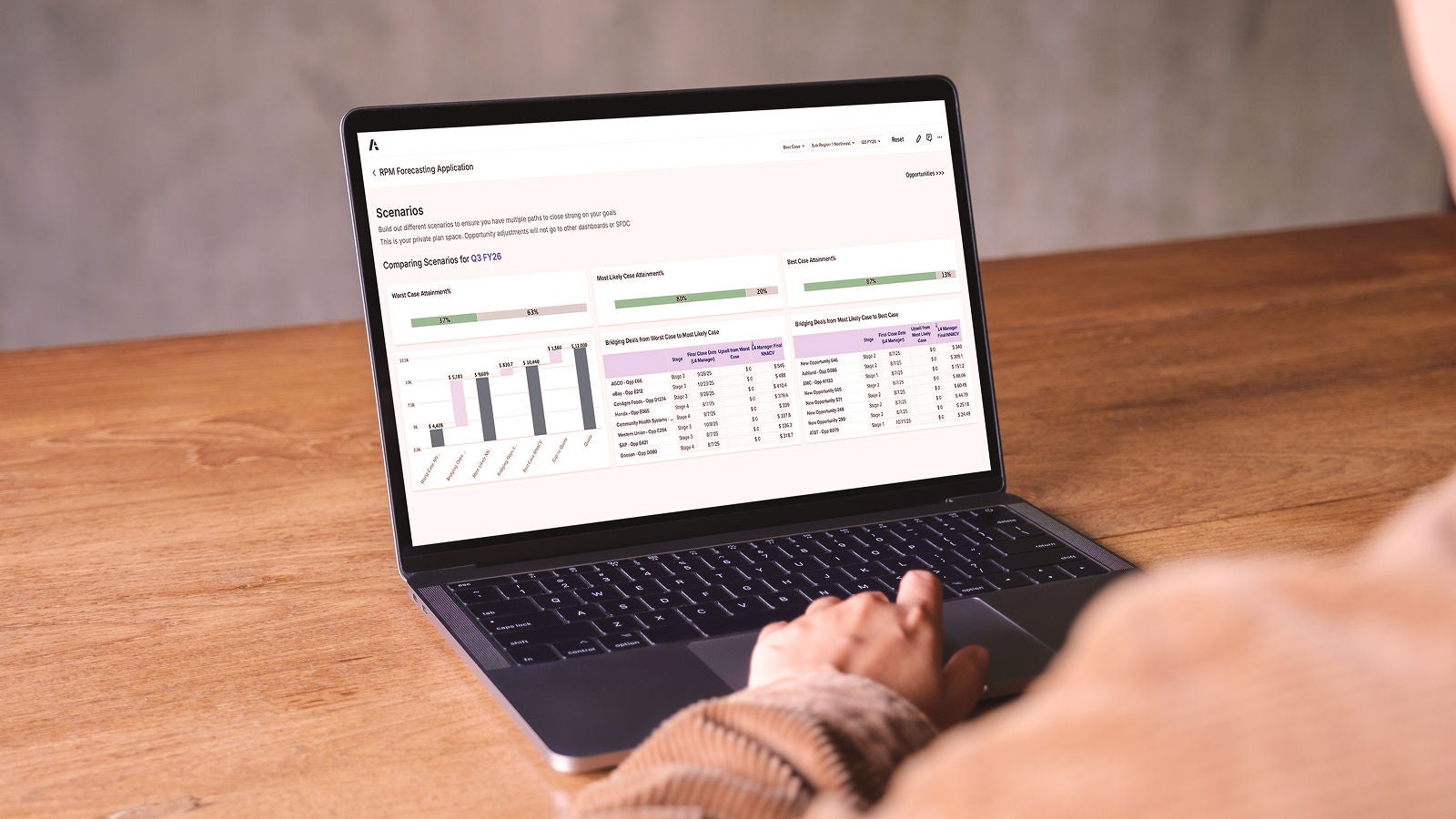
When operationalizing your GTM plan, sales leaders need to predict accurate revenue targets or pivot when those targets are at risk of being missed. It’s all about anticipating what could happen and modeling out various paths to ensure predictable revenue. As you analyze various sales scenarios, you should be evaluating how these factors impact one another:
- Real-time market trends
- Total addressable market potential
- Historical win rates
- Seller capacity
- Territory and quota adjustments
- Sales cycle lengths
- Available marketing budgets
- Changing pricing structures
- Shifting buyer behaviors
- Distribution channel performance
Incentive compensation
Before finalizing your plan, you must thoroughly model quota attainability against expected incentive compensation payouts. This ensures your targets actively motivate your sellers to execute your GTM strategy without accidentally breaking the company budget.
If you do it right, you will motivate your team with clearly executed commission plans that reward the right behaviors. But unfortunately, many sales leaders are saddled with unscalable, expensive sales compensation programs that often inadvertently drive behaviors incongruent to the GTM strategy. With a platform that helps ensure sales crediting is aligned to your territory and quota plan, you build trust through accurate payments and complete transparency.
"Managing sales compensation in Anaplan hasn’t just given us a scalable way to calculate the commissions that sales reps are earning, but it also gives the reps an easy way to see their data and understand what’s driving their earnings. The commissions waterfall was a big win for us. Previously, it was a very manual process. We automated all of that now in Anaplan. So that has saved approximately 20 hours a month in manual work." — Senior Manager, PagerDuty
Top capabilities to look for in a RPM solution
When evaluating different platforms, it’s essential to look beyond basic functionality. To truly orchestrate revenue, your RPM platform should offer these features.
| Key capability | Why it’s needed |
|---|---|
|
Seamless data integration across the business |
It must integrate flawlessly with your CRM, but also connect deeply with other critical functions like finance and HR. |
|
Connected GTM processes |
Instead of having a different platform for each sales capability, look for a platform that handles sales forecasting, capacity planning, incentive compensation, and territory and quota planning in a single, unified space. |
|
Dynamic “what-if” scenario planning |
You need the ability to see how different variables — like a sudden market shift or a change in product pricing — could impact your predictable revenue. |
|
Built-in AI for faster insights |
AI should help surface revenue insights around pipeline health and buyer behaviors faster and more accurately. According to Gartner®, “sales organizations that achieve moderate to large AI time savings, and then reinvest that time into high-impact sales activities, are 2.2x more likely to exceed customer growth goals and 3.1x more likely to exceed lead-to-opportunity conversion goals, compared with organizations that reinvest less.”[1] |
|
Agility for ongoing changes |
The market doesn't stop changing after Q1 and neither should your plan. The tool must enable continuous adjustments throughout the year. |
|
Comprehensive dashboards |
You will want an easier way to understand historical runs, sales velocity, seasonality, and real-time performance KPIs on dashboards that update consistently. |
Top questions to ask vendors
As you narrow down your shortlist, use these questions to cut through the confusion and assess the capabilities of the platform.
- How often can forecasts update (like real-time versus batch processing)?
- Can our finance, HR, and RevOps teams work within the same data and platform simultaneously without breaking it?
- How are territories created and how does the platform ensure they are balanced?
- How easy is it to adjust territories and quotas mid-year as business conditions change?
- Is the platform able to adjust sales crediting scenarios as territory and quota plans change?
- Can complex compensation plans be modeled and tested before they are officially rolled out?
- What is the platform’s AI strategy? Are the agents merely querying model data or are they built on a unified data model and workflow best practices to ensure that they return accurate results and can make meaningful recommendations?
- How long does a typical implementation take for an organization of our size?
- What level of technical expertise is required to make everyday changes?
- How does the platform scale as our sales organization grows?
Why consider Anaplan?
If you are looking for a platform that checks all these boxes, Anaplan stands out as a leader in this space, as recently seen in the 2026 Gartner® Magic Quadrant™ for Sales Performance Management.
Anaplan’s key differentiator is its ability to help you build the right GTM plan that aligns accounts, territories, and capacity to real market opportunities, so your sellers start day one of the quarter with an achievable quota. By combining AI-driven insights with real GTM data, you can deliver a sales plan that leaders can use to orchestrate revenue with confidence.
It also helps you adapt to market dynamics. You can stay on plan even when conditions change by continuously modeling, rebalancing, and acting in real time to keep revenue performance perfectly on track.
The right RPM software lays the foundation for predictable growth. When territories, quotas, capacity plans, and sales forecasts are connected, revenue leaders can adapt faster, make more informed decisions, and give every seller a realistic path to success. The result is better performance, stronger rep retention, and greater confidence in your revenue plan.
That's why Anaplan is proud to be named a Leader in the 2026 Gartner® Magic Quadrant™ for Sales Performance Management. Ranked with the highest Ability to Execute, we believe our GTM planning solutions are built to help enterprises make decisions with greater agility, accuracy, and confidence.