Key takeaways:
Crude doesn’t wait. Margins move in hours. And yet many pricing decisions still rely on models that take days to update. That gap is where margins begin to erode. Every hour of lag between a crude price move and your pricing response is a window of exposure. In a volatile market, that window can prove costly. As volatility accelerates, you are under constant pressure to respond to swings in crude input costs, shifts in product demand, and tightening crack spreads.
Pricing decisions that once played out over planning cycles now need to happen in near real time, with direct implications for margin, inventory, and throughput. Consider a sudden crude price spike. Feedstock costs rise immediately, but if pricing adjustments lag by even a day, margins compress across every barrel sold in that window. At the same time, refinery runs and yield outputs may already be locked in, limiting your operational agility.
You may turn to AI to keep up, assuming better algorithms will produce better pricing decisions. However, when AI is layered onto fragmented data, rigid models, and manual workflows, it doesn’t solve the problem; it exposes it. AI can generate forecasts faster and surface patterns earlier. However, if the underlying planning environment is fragmented, those insights are inconsistent, difficult to trust, and even harder to operationalize across refining, supply, and commercial teams.
This results in a widening divide. Some refiners are successfully using AI to move faster and protect margins, but many others are using it in fragmented environments, compounding uncertainty and falling short of their AI aspirations. The difference is not the level of AI maturity, but rather, the strength of the planning foundation underneath it.
Downstream pricing breaks when crude volatility outpaces the model
For many refiners, pricing and margin planning remains a reactive, fragile, and high-risk exercise.
Data fragmentation is often the root cause. For planners, this is a daily struggle. It’s the inability to easily convert operational data, like purchased electricity (MWh) and produced steam (lbs), into a common energy denominator like lower heating value (LHV) to understand true costs. It's trying to forecast revenue while juggling market-indexed pricing (MIPs) with shifting differentials, real-time short-term price optimization (STPO) adjustments, and a constant deluge of data from energy information services (EIS). When crude prices shift, there is no single, synchronized view of how that change impacts product margins across regions, channels, and time horizons. Risk is embedded in every pricing decision.
Then comes the scramble to reconcile and respond. Analysts spend critical hours pulling data, rebuilding scenarios, and aligning assumptions across stakeholders. What should be a strategic pricing decision becomes a manual exercise in data assembly, delaying response at the exact moment speed matters most.
Pricing models are often too rigid for today’s volatility. Plans built on static assumptions cannot keep pace with rapid changes in crude markets, product demand, or logistics constraints. A regional demand spike for gasoline may justify a pricing increase, but without visibility into refinery output or supply limitations, that decision can create downstream imbalances and missed margin opportunities. Every disruption triggers manual rework.
The consequences are immediate and compounding. By the time pricing decisions align with refinery output and supply realities, the market has already moved. This means slower decisions, inconsistent execution, and unnecessary exposure that continues to erode performance. At its core, this is not a forecasting problem; it is a planning problem that constrains your ability to act in a volatile market and prevents AI from delivering meaningful results.
How a strong planning foundation turns crude volatility into a margin lever
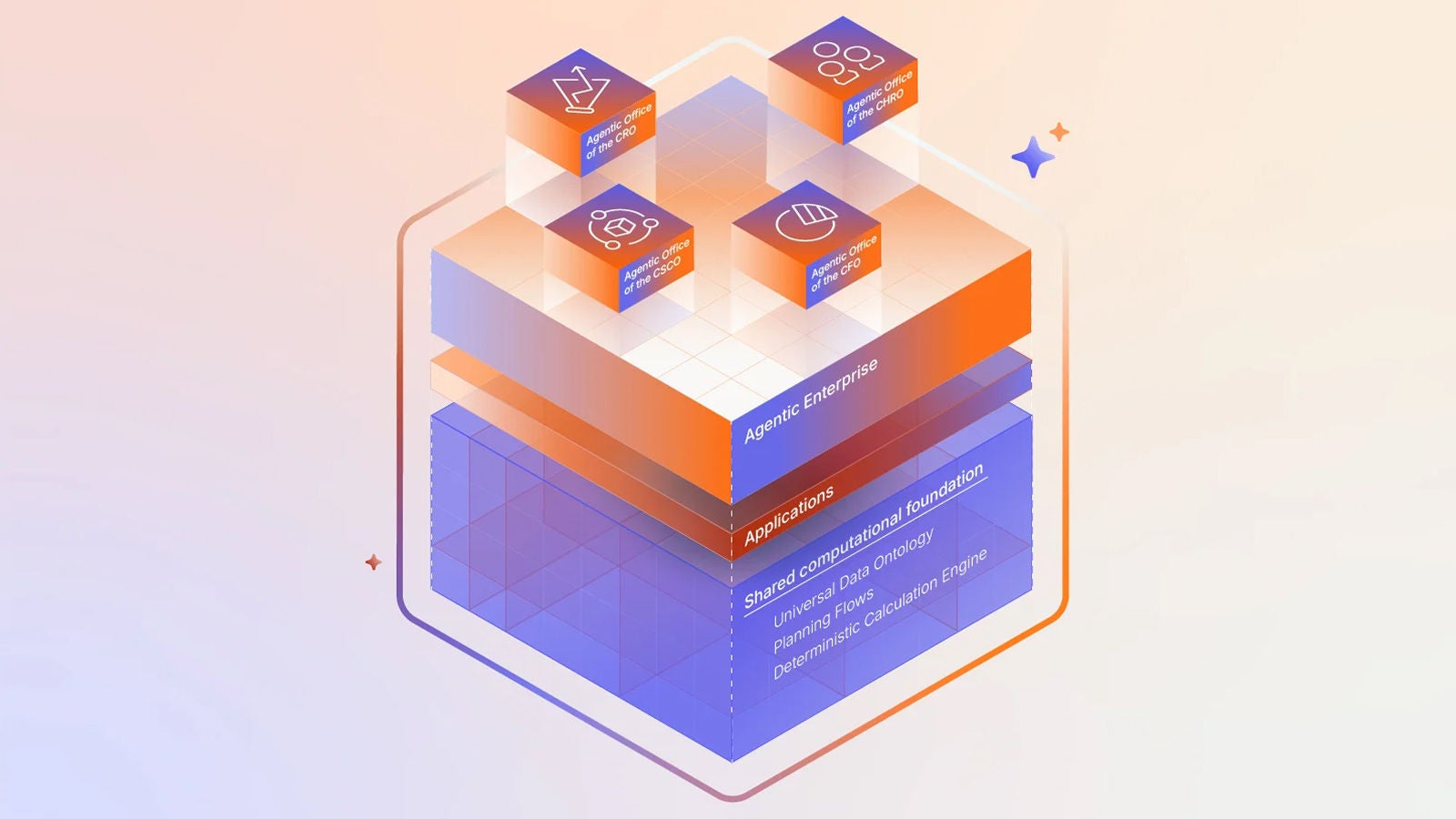
To respond to crude volatility in real time, you need more than faster analytics. You need a unified planning foundation that aligns pricing, refining, maintenance, supply, and financial decisions in a single environment.
- A unified model brings your business into one view. Crude costs, refinery runs, yield outputs, product pricing, inventory positions, and margin targets are integrated, so that a change in one variable flows dynamically through the entire plan. Pricing decisions are no longer made in isolation — they reflect the full operational and financial impact across the value chain.
- Real-time calculation replaces delayed insight. As market conditions shift, changes cascade immediately through margins, pricing strategies, and supply decisions. You can evaluate multiple scenarios in parallel, understanding trade-offs between margin, volume, and throughput before committing to action. What once required hours of reconciliation becomes an immediate, decision-ready view.
- Planning is coordinated, not fragmented. Commercial, refining, supply, and finance teams operate from the same data and workflows. As crude prices move, refinery output changes, or logistics constraints emerge, the downstream impact is visible across the organization. Decisions are aligned in real time rather than reconciled after the fact.
Integrating data, decisions, and operations in real time transforms planning from a reactive process into a strategic advantage. Pricing becomes dynamic, margin exposure is reduced, and you can act with speed and confidence.
Modern enterprise planning applications make connecting complex refining logistics, capital-intensive assets, and specialized field labor possible, enabling teams to rapidly respond to volatile market prices and protect downstream margins.
AI as a strategic planning accelerator
Once a unified planning environment is in place, AI can begin to deliver meaningful value.
Advanced forecasting continuously analyzes crude movements, product pricing trends, and demand signals to generate forward-looking projections that help you anticipate margin impact before it materializes. Instead of reacting to volatility, you can prepare for it.
At the same time, intelligent model-building capabilities allow you to evolve planning logic as conditions change. New scenarios, pricing strategies, turnaround schedules, or logistics considerations can be incorporated quickly without rebuilding models or delaying decisions.
When crude spreads shift, you can model multiple pricing and production responses in parallel, evaluate trade-offs between margin and throughput, and optimize and adjust plans in real time.
This combination of faster insight and faster adaptation enables truly dynamic pricing.
Leading downstream organizations are reducing pricing response times from days to hours by building a unified, scenario-driven planning foundation, not layering AI onto disconnected models. When data, assumptions, and workflows are connected, decisions accelerate. Without this foundation, AI amplifies instability and falls short of expectations.
Anaplan CoModeler rapidly creates and optimizes planning models, improving the speed and accuracy of critical decisions across capital projects, supply chain, and production forecasting in the oil and gas industry.
Human planning, amplified by AI
The future of downstream pricing is not AI alone. It is human planning, supported by intelligent insight. AI surfaces patterns while humans apply judgment. Together, you make faster, more confident decisions.
When your planning foundation is strong, less time is spent reconciling data and more time making decisions that matter for the business. Commercial, refining, supply, and finance leaders can focus on pricing strategy, performance, and alignment across the value chain. The organizations that succeed will not be the ones that adopt AI the fastest. They will be the ones that fix their planning foundation first and then use AI to amplify it.
4 capabilities that determine whether AI delivers or falls short
What separates organizations that realize this potential from those that don’t is how their planning operates. In downstream oil and gas, it comes down to four capabilities:
- Downstream-specific business context built in
Planning models reflect the full complexity of refining and commercial operations, from converting disparate energy units (MWh, lbs, Mcf) into a common LHV for cost analysis, to managing the intricacies of market-indexed pricing (MIPs) and short-term price optimization (STPO). AI operates within real pricing and supply decisions, grounded in how margin is created and exposed across products, markets, and channels. - Real-time, transparent calculation engine at scale
A high-performance calculation engine continuously reconciles crude inputs, refinery yields, product pricing, inventory positions, and demand signals into a single, synchronized view that’s fully auditable. Every number is traceable, allowing you to drill down from a top-level net income figure to the specific operational driver or scenario adjustment that influenced it. Any change instantly cascades through product margins, regional pricing strategies, and overall profitability, delivering precise, decision-ready insight at scale. - Integrated data and automated decision workflows
Commercial, refining, supply, and finance data from enterprise resource planning (ERP), commodity trading and risk management (CTRM), and energy information services (EIS) systems are automatically integrated, and teams plan from the same insights and workflows. A change in a refinery's production instantly updates the consolidated inventory balance and its financial value, enabling faster, more coordinated decisions. - Decision intelligence unique to your business
Every pricing adjustment, refinery run decision, and market response generates new operational data. Over time, this builds a proprietary layer of downstream performance intelligence that is traceable and auditable. This improves forecast accuracy, refines pricing and production strategies, and increases confidence in decisions.
When you skip this groundwork, you risk automating instability. The real competitive divide is not who adopts AI the fastest. It is who builds the right planning foundation first. Once that foundation is in place, AI becomes a source of speed, clarity, and better decisions.