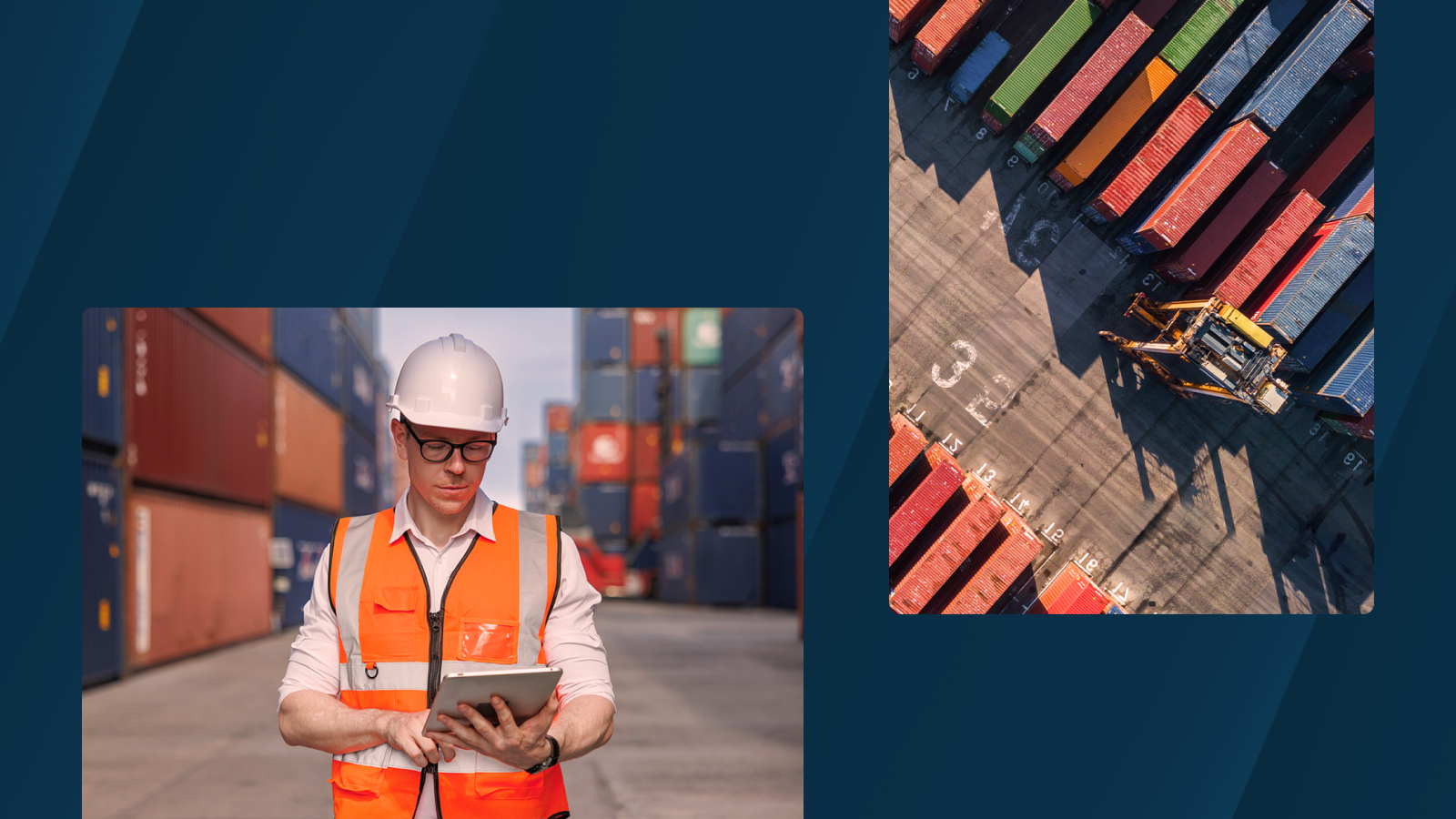
Managing a supply chain is challenging enough when you're balancing demand variability, supplier reliability, and logistics constraints. Rapidly changing tariff regimes only make the job harder. In recent discussions with supply chain and operations leaders, tariffs and the modeling challenges they pose have emerged as a top concern. And no one really knows what further shocks and shake-ups are around the corner.
The real question isn’t if disruption will strike again, but how ready you’ll be when it does.
When trade policy becomes a moving target
Tariffs introduce import and manufacturing uncertainty by increasing costs, squeezing margins, and forcing sourcing decisions at speed. The latest measures have already impacted diverse sectors, including steel, aluminum, semiconductors, and pharmaceutical products.
Every tariff change requires a review of Harmonized Tariff Schedule (HTS) codes for goods to understand the change in import and export duties. But many companies have only some of their SKUs correctly linked to HTS codes, which renders tariff modeling incomplete.
Without a connected, end-to-end modeling approach, you'll struggle to analyze costs, pricing impacts, and compliance obligations in real time. These gaps hide the true cost of doing business.
From first-order shocks to long-term shifts
The immediate concern for any supply chain leader is to determine exposure and how quickly you can measure it. To answer this, you need to understand how tariffs affect different parts of your business.
- First-order effects of tariffs are direct and immediate. Higher landed costs, pricing pressure, and difficult choices around warehousing strategy emerge. Here, you must decide whether to hold more stock as a buffer or stay lean to protect market share.
- Second-order effects of tariffs reach deeper into the economy. They include inflation, slower revenue growth, and delays in ports and logistics. These broader shifts alter customer demand, necessitating a reconsideration of sourcing, and an ongoing recalibration of forecasts and supply plans.
- Third-order effects of tariffs impact long-term, strategic decisions. For example, slower GDP growth can reshape decisions around capital expenditures (CapEx), supplier diversification, or even where to locate manufacturing and distribution hubs.
What starts as a pricing issue inevitably cascades into challenges that reshape your entire business strategy.
Planning smarter across every horizon
Traditional supply chain planning approaches that rely on spreadsheets, disconnected systems, and static reports can't keep up with tariff volatility or the next geopolitical disruption to the supply chain.
Today’s organizations need planning platforms that enable teams to run scenarios as conditions change daily and eliminate the need for manual data gathering. Instead of reacting after the fact, these platforms allow planners to model new tariffs or cost shocks and adjust in real time.
Every planning action must connect to its decision horizon.
- Strategic planning looks three to five years ahead, focusing on footprint, supplier portfolios, CapEx, and ownership risk.
- Tactical planning spans six to 24 months and involves sourcing changes, contract resets, and capacity adjustments.
- Operational planning focuses on the short term between zero and 18 months. It manages production, safety stock, and routing.
- Executional planning covers immediate needs up to two weeks ahead, or three months ahead for complex products such as consumer electronics. It manages exceptions, last-minute substitutions, and fulfillment commitments.
With such complex, multi-variable scenarios, supply chain teams need AI-driven scenario planning to help model the options.
AI's edge in supply chain resilience
AI-first planning platforms help supply chain leaders model, simulate, and change plans as conditions change. These platforms allow you to:
- Compare tariff impacts across several countries, factoring in variations in labor and logistics costs.
- Evaluate the impact for multi-component products like cars where a single finished product depends on thousands of HTS-screened parts.
- Update these insights daily as trade data, supplier inputs, and shipping conditions change.
AI-driven planning tools constantly update sourcing, pricing, and inventory options as tariffs change, or new problems arise.
- Machine learning (ML) drives forecasting and network optimization.
- Generative AI extends these capabilities into integrated business planning (IBP), enabling scenario modeling and “what-if” analysis across your supply chain.
- Agentic AI goes even further, autonomously managing exceptions such as reallocating materials or prioritizing orders, with humans firmly in control.
Leading organizations are turning these insights into action — balancing the risk between excess inventory and stockouts, evaluating alternative suppliers and nearshore options, and being able to explain the financial impact of every decision across their networks.
The result is smarter pricing strategies and more confident customer conversations. At the same time, stakeholders gain the transparency they expect: tariff code evidence, cost breakdowns, and competitive benchmarks.
Future-proofing through intelligence and agility
Senior leaders from COOs to CFOs and CEOs know supply chains must evolve to meet a more volatile and complex global environment. It’s tariffs today, but tomorrow it could be export controls, shipping route closures, or another global shock.
With Anaplan, you can model, compare, and pivot across scenarios in minutes, not days or hours. Dynamic scenario modeling lets you test sourcing strategies, assess new trade policies, and measure financial impact instantly as conditions change.
Powered by ML, generative, and agentic AI, Anaplan creates a connected, intelligence-driven planning environment where insights refresh continuously and your teams can act at the speed of disruption.
The result is a living supply chain that senses change, adjusts in real time, and keeps you one step ahead of whatever’s coming next.