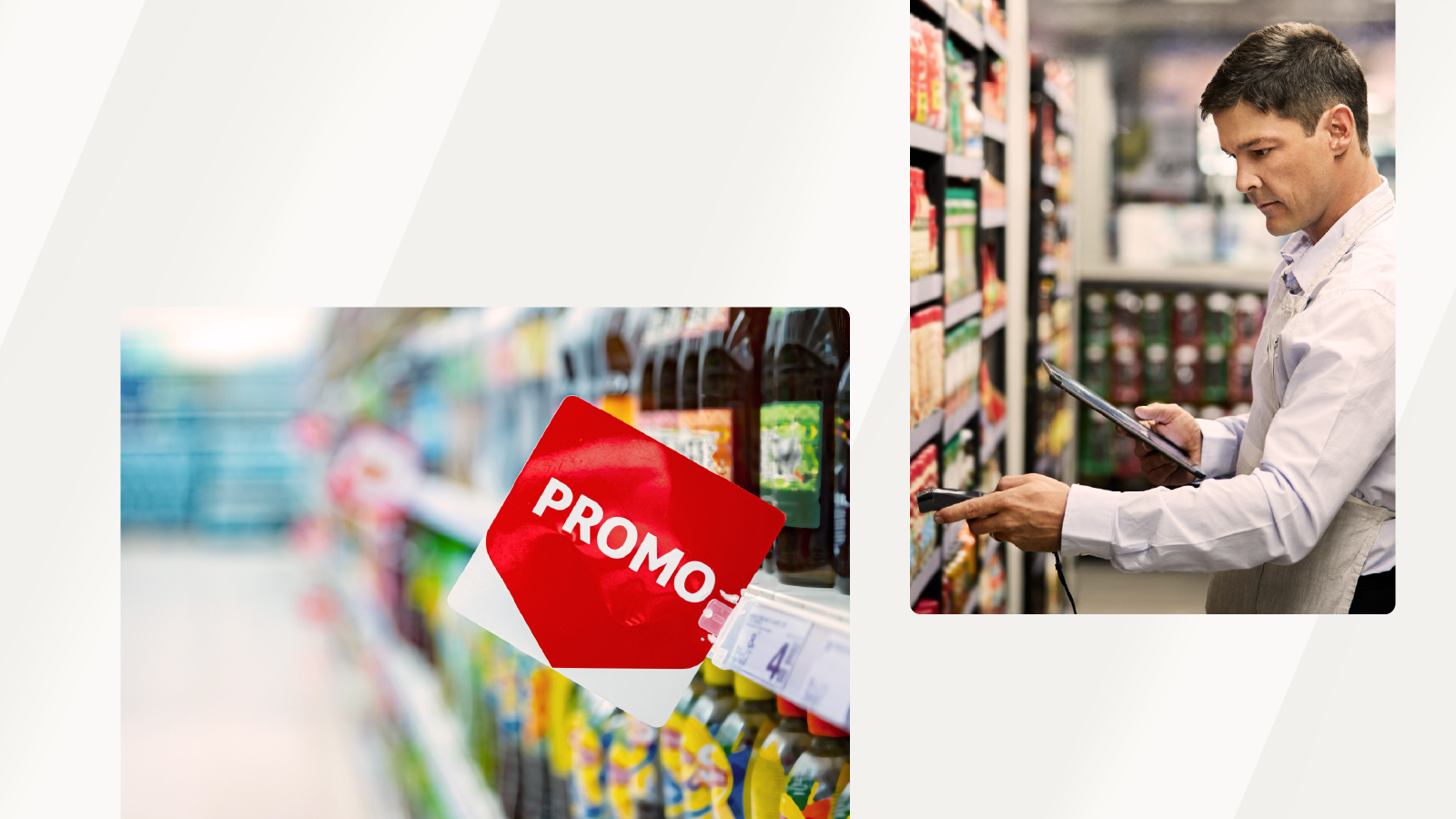
After years of steady price hikes, many consumer packaged goods (CPG) brands have reached the limits of customer tolerance. With price sensitivity rising and buyers searching for better deals, trade promotion has become the final, critical lever to protect margins. It's also one of the riskiest.
As the nineteenth-century retailer John Wanamaker once said, “Half the money I spend on advertising is wasted; the trouble is, I don’t know which half.” A century later, CPG leaders could say the same about trade promotions. When promotions are based on last year’s results or gut instinct rather than data, too many dollars are wasted. The challenge now isn’t how much to spend — it’s how to make every dollar accountable.
That’s why the conversation around trade promotion management (TPM) is more important than ever. In the past, many CPG teams treated pricing like a volume dial, turning up discounts to drive short-term sales. But with inflation and price resistance reshaping shopper behavior, that approach no longer works. Success now depends on more sophisticated strategies that balance elasticity, perceived value, and measurable ROI.
The scale of the trade promotion management challenge
Trade promotions represent one of the biggest investments in consumer goods. Globally, companies spend more than $500 billion every year on promotions designed to drive sales and market share. Yet with margins tightening, that spend is under greater scrutiny than ever.
It’s no surprise that improving promotional effectiveness has become the number one near-term priority for revenue growth management (RGM) teams. More than half of CPGs allocate over 15% of their annual revenue to trade promotions alone, making even small gains in efficiency and ROI incredibly valuable.
A new mindset for trade promotion management
In a soft consumer market, the brands that win are replacing post-mortem analysis of trade promotion performance (“what happened?”) with pre-mortem decision-making (“what will happen if we do this?”).
That shift from hindsight to foresight is one already being made by the smartest CPG organizations. By applying predictive machine learning modeling to determine price and promotion elasticity and demand forecasts, you can calculate the full P&L of every planned promotion before it goes live. You can go even further by automating the evaluation of other promotions — even ones you’ve never tried before — and selecting the option that drives the greatest value.
Instead of keying in a hoped-for volume lift, planners can model how changes in price, duration, and promotion type affect revenue and margin at the SKU, account, and day level. That means promotions are approved — or rejected — based on clear ROI, not assumptions.
Making every promotion count
CPG organizations don’t just want higher ROI from promotions, they need it. But the difference between a good promotion and a bad promotion isn’t just marketing creativity — it takes financial clarity.
When trade promotion teams can see the likely P&L outcome in advance, they can stop repeating unprofitable activities and reinvest in tactics that grow both volume and value. Industry benchmarks suggest that simply avoiding underperforming promotions and reallocating spend to better ones can yield as much as 1–2% of revenue improvement straight to the bottom line.
That’s real margin growth, not just time saved on spreadsheets.
What good trade promotion management looks like
Across the industry, most CPG companies already track spend. The differentiator now is how intelligently it’s managed. That intelligence depends on five connected capabilities that together deliver measurable ROI:
1. Trade promotion optimization
Predictive modeling recommends alternative promotions based on baseline forecasts, price elasticity, and promotional conditions. Teams can easily select recommended promotions and know the financial impact of each promotion before it happens. This maximizes business value, not just volume.
2. Promotion investment management
A fully configurable P&L lets planners manage and standardize investments by tactic or channel while comparing plan versus actuals. That consistency improves governance and accountability across the organization.
3. Trade spend management
Built-in “checkbook management” provides real-time visibility into budgets and commitments. Teams can make strategic adjustments mid-cycle, instead of waiting for quarter-end reconciliations.
4. Promotion planning and execution
Scenario planning and alignment ensure that every promotion — from product to customer to channel — stays within financial and operational guardrails. The result is a more consistent shopper experience and higher incremental ROI.
5. Joint business planning
Too often, retailer–supplier relationships are one-sided. The retailer says “jump,” and the CPG asks, “how high?” By providing a tailored, retailer-specific financial view of promotions, CPG companies can shift the conversation toward shared profitability and strategic growth, rather than short-term volume pushes.
Together, these capabilities create a single, connected environment where trade spend is transparent, measured, and continuously optimized. But great functionality only matters if it addresses the real challenges CPG teams face every day.
From trade promotion insight to execution
In many organizations, the TPM team builds the most accurate short-term forecast in the company, only for supply chain to discard it and rebuild their own. That disconnect doesn't just waste time, it directly erodes the value of trade optimization.
Despite industry analysis suggesting that smarter TPM can generate around a 1% uplift in revenue, equating to a 10% lift in profit for many CPG companies, that benefit only materializes if the plan is actually executed.
Through a single connected platform like Anaplan, CPG leaders can plan and execute promotions with greater value, accuracy, and agility. Real-time, pre-event forecasting supports agile promotion decisions, using transparent AI/ML models that make underlying assumptions visible and adjustable.
Anaplan trade promotion management sits within the broader RGM ecosystem. It connects seamlessly with Anaplan demand planning, supply-chain, and finance applications, as well as third-party applications. When a trade promotion plan is approved, the forecast flows directly into demand planning. This means that production, logistics, and finance teams act on the same signal, not competing versions.
This connection ensures the uplift forecasted in TPM becomes the demand plan executed in the market, closing the loop between commercial intent and operational reality. Crucially, it ensures that the potential 10% profit gain doesn't stay theoretical.
Dairy co-op Kemps cut its review cycle from monthly to quarterly, caught six-figure errors before they hit the books, and deployed its TPM solution ahead of schedule, all using Anaplan.
The outcome: Real margin growth, real confidence
When CPG leaders can see exactly how promotions affect revenue, cost, and profitability, trade spend becomes a strategic lever rather than a blind expense. With a connected, data-driven approach, CPG leaders can shift trade spend from reactive cost to proactive value creation.
With the Anaplan Trade Promotion Management application, you can:
- Quantify ROI before you fund a promotion.
- View recommended promotion alternatives with potentially higher value.
- Standardize governance and investment rules across accounts.
- Align promotional and financial metrics with retail partners.
- Feed accurate forecasts directly into demand planning.
- Turn trade promotions from a cost center into a growth driver.
The result isn’t just better planning, it’s better performance. In a market where every basis point of margin matters, data-driven TPM helps brands compete smarter, react faster, and build stronger relationships across the value chain.
Beverage company Lion Australia cut claim-processing errors by 1.5% in the first year and recovered 5,000 working hours annually. By integrating TPM into its broader planning platform, it moved past siloed spreadsheets and into real-time promotion management.
Ready to move from hindsight to holistic trade promotion management?
Trade promotion investment is too important to be an afterthought. With a connected, data-driven approach, you can plan, execute, and measure promotions that deliver proven ROI, and ensure those plans are executed seamlessly across the business.
Anaplan’s Trade Promotion Management application unites trade, demand, and finance in one flexible, collaborative solution that scales with global configurability. Real-time “what-if” scenarios — powered by transparent and tunable AI/ML — deliver instant insights into both margin and demand. With seamless integration to ERP systems, demand planning, and IBP, Anaplan empowers business users to optimize, plan, and execute promotions without relying on IT or rigid vendor workflows.