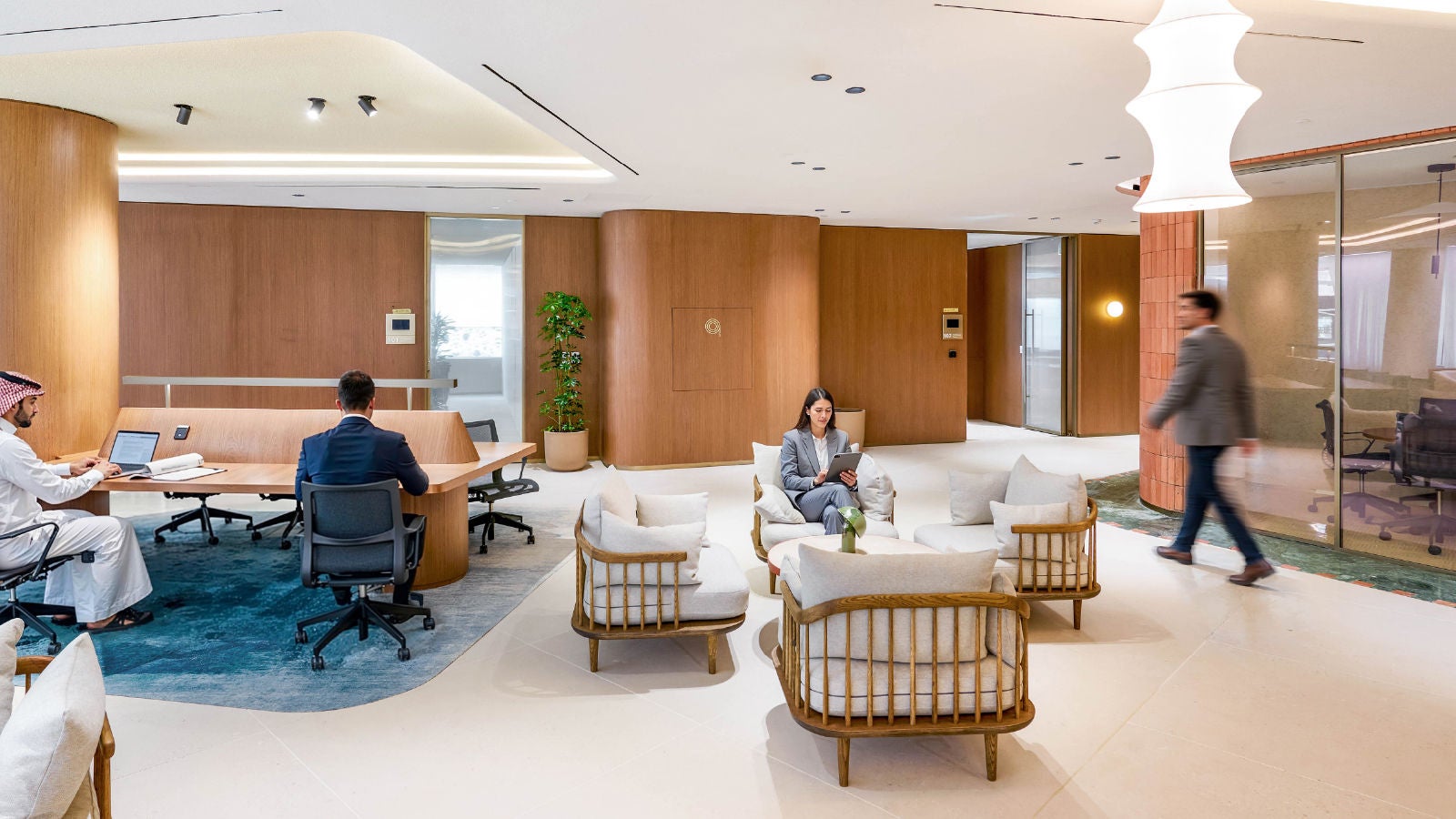
Modern Executive Centre office lounge with professionals working at tables, using a tablet, and walking through the space.

The Executive Centre connects finance and HR to drive expanding operations

Asia-Pacific’s leading flexible workspace provider improves long-range planning, reforecasting, payroll allocation, and reporting speed across finance and HR

  • Solutions

    Finance,

    Workforce

  • Industry

    Professional & Business Services

  • Platform capability

    Data Management & Integrations

With 260+ Centres across Asia-Pacific and the Middle East, premium flexible workspace provider The Executive Centre (TEC) sought a technology platform to enable more dynamic, data-driven decision-making. With Anaplan in finance and HR, the company has accelerated long-range planning, enabled monthly reforecasting, saved dozens of hours every year doing payroll allocation, and slashed monthly reporting time. With its distributed organization sharing a scenario planning and analysis platform, TEC’s people can focus on work that drives the business forward.


We just load the raw data from our accounting system into Anaplan, and the system does the rest.
Louis Yam, Financial Planning & Analysis Director, The Executive Centre

75%

faster long-range planning cycles enable monthly reforecasting and rapid decision-making

60

person-hours saved annually through system-driven payroll allocation

96%

time savings in monthly report generation thanks to automation and Anaplan XL Reporting


The Executive Centre (TEC) is the leading premium workspace provider in Asia-Pacific and the Middle East. TEC operates more than seven million square meters of office space across more than 260 centres in the central business districts of 38 major cities. More than 80% of its clients — TEC calls them members — are multinational corporations, including Anaplan.

Technology is central to the company’s success, so when a legacy financial planning system reached end-of-life, the TEC team saw an opportunity: “The company is growing rapidly and our business model keeps evolving, so we didn’t just want a replacement,” explains Louis Yam, TEC’s Financial Planning & Analysis Director. “We needed a future-ready platform that could scale with our growth and support dynamic, data-driven decision-making.”

Along with that strategic vision, Yam and his colleagues had practical, tactical needs: They wanted to reduce the time spent gathering and combining data from multiple siloed systems. They sought to eliminate technical bottlenecks that allowed only one person at a time to work in a model. And they wanted to shrink the wait-time for changes in one system to be reflected in others — a lag that could last an hour and bring analysis to a standstill.

Game-changing technology, with self-sufficiency

TEC chose Anaplan as its planning platform. The Anaplan solution TEC has built enables integrated reporting, forecasting, and decision-making across finance and HR. More than 150 people throughout TEC regularly use Anaplan today.

“The concept is to have an integrated platform that allows users from all geographic locations to work and plan using the same data,” Yam explains. “It’s game-changing for a distributed business like TEC because it reduces email and other back-and-forth communications that cost time and introduce the risk of errors.”


We have the latest sales data in Anaplan by using ADO.
Louis Yam, Financial Planning & Analysis Director, The Executive Centre

TEC’s planning environment uses Anaplan Data Orchestrator (ADO) to accelerate formerly slow processes. Other technologies that TEC had tried using to integrate Salesforce data (for example) didn’t capture contract changes in real time, so planners weren’t always working with current information. But the unified data model provided by ADO reflects granular contract updates immediately. “It captures all the little changes,” Yam says. “We have the latest sales data in Anaplan by using ADO.” Yam proudly adds that TEC’s internal Anaplan team implemented ADO without outside help.

Multidimensional benefits

TEC sees benefits from Anaplan along multiple dimensions, including:

  • Rapid long-range planning: TEC’s long-range planning cycle time was cut by 75% — from one month to one week — with Anaplan. This acceleration enables the company to reforecast monthly, compared with twice a year with its legacy system, even though more stakeholders now participate in the process. With monthly reforecasting, leaders can identify emerging risks and respond proactively to market changes and opportunities. That’s a competitive advantage in an industry where fast decision-making impacts both market share and profitability.
  • Real-time, reliable workforce planning: By integrating Anaplan with its SAP SuccessFactors Human Resources Information System (HRIS), TEC has established a source of truth for headcount and payroll costs. (Salaries for its 2,000+ employees run between 15 and 20% of expenses.) Because finance and HR data are connected in Anaplan, workforce forecasts are based on real-time payroll data and are significantly more reliable than they were pre-Anaplan, Yam says.
  • System-driven payroll allocation: TEC has shifted from manually allocated payroll costs to a system-driven approach using Anaplan. Payroll cost allocation helps TEC build accurate budgets that account for regional employees who support multiple centres. This allocation had been based on revenue, but that driver could change many times during the budget cycle. When TEC moved to Anaplan, it adopted a more stable driver — the centres’ gross area — as the payroll allocation basis, which enabled system-driven allocation and eliminated manual processes. This saves as much as 30 person-hours twice a year.
  • Month-end reports in minutes: A pre-Anaplan six- to seven-hour monthly reporting process — uploading, data validation, and statement production — is now completed in as little as 15 minutes. There’s really just one step in the process now, Yam says — “We just load the raw data from our accounting system into Anaplan, and the system does the rest.” The 96% time-savings is possible even with the company’s diverse reporting needs based on different kinds and “vintages” of centres (more on that later), multiple revenue streams (lease income and services, for example), and other complexities. Anaplan XL Reporting is built into the process to automate the formerly manual copy-and-paste process from planning systems to report spreadsheets.
  • Performance monitoring: TEC organizes its portfolio — and monitors product performance — based on how long a centre has been in operation. “Similar to wine, we have different vintages for our centres based on the year when they opened,” Yam explains. The “vintage” dimension is built into TEC’s Anaplan models, enabling the FP&A team to handle mature centres while TEC’s investment management team does the new centres. The respective teams can then manage performance of their portion of the portfolio on the same system, using common data and assumptions.
  • Fast and useful scenario analysis: The ability to rapidly build and test scenarios — even during executive briefings — empowers decision-makers with timely and accurate data. “During a meeting, I can spend two minutes adjusting assumptions and immediately go through the revised results with business leaders,” Yam explains. “As a result, we save time and everyone can walk out the meeting happy."

Effort where it has the greatest impact

While the time savings from Anaplan are beneficial to TEC, Yam thinks it’s just as important that finance and HR work is now done in the context of the entire business.

“An input that someone makes in their part of the system is automatically reflected in the systems for all team members because of Anaplan’s real-time calculation engine,” he explains. “That saves time in administrative processes and lets us understand — and work on — the most relevant and important drivers for the business. That’s where our efforts have the greatest positive impact.”


Two business professionals converse while seated on a sofa in a modern office lounge with a café area in the background.
Business professional presents to three colleagues in a meeting room with The Executive Centre logo displayed on a screen.